Introduction and Overview
This module explores what it means to intentionally add creativity into daily routines. It encourages learners to design systems that feel engaging rather than draining. To do this, a variety of specific topics and information will be provided to the learner, following with activities for each section. Aesthetic Documentation and Organization, Dopamine Menu, and Personal Curriculum will each be topics that are addressed in this module. When viewing the following topics, it is important for the learner to note that they do not need to adopt all of these methods in their daily lives and routines, but to try each of them to see what best fits them.
Aesthetic Documentation and Organization:
This section explores how to implement whimsy and creativity into one’s documentation and organizational processes.
1. What whimsy means, and why it matters:
Whimsy is the enactment of unexpected, playful humor or fanciful ideas. Whimsy manifests itself in art, fashion, decoration, and other forms of self expression. It is an integral part of daily life as it allows an individual to express their thoughts, feelings and identity. Taking joy from these moments of self expression promotes strong mental health, social connections, as well as self confidence. Whimsy can be implemented into monotonous organization tasks such as scheduling and planning, note-taking and journaling, and scrapbooking and aesthetic organization.
2. Using colourful digital calendars:
3. Productivity apps and planners:
4. Scrapbooking and aesthetic organization:
Accountability and Dopamine Menus:
This section introduces the concept of a dopamine menu — a personalized list of activities that support healthy mood regulation.
1. Defining a Dopamine Menu
A dopamine menu is a set of personalized activities that help spark motivation in your brain during periods of procrastination, feeling unmotivated or being overwhelmed. This tool is intended to provide options in a similar manner to how one would pick out dishes from a restaurant menu: it includes starters, entrees, sides, desserts and specials. This resource is tied to the concept of the dopamine reward system, a psychological pathway in which the brain experiences feelings of motivation in response to rewarding activities (Volkow et al., 2009).
A UBC Science blog outlines the list of menu activities, and how they are to be implemented within your day:
Starters
Starters are short, low-effort activities that help you ease into productivity. Examples include:
- Making a cup of tea or coffee
- Doing one minute of jumping jacks or stretches
- Watering a plant
- Sending a quick voice message to a friend
Entrées
Entrées feed your brain with satisfaction and creative energy. They are a bit more immersive than starters. Examples include:
- Cooking a comforting meal
- Diving into a creative hobby (painting, writing, coding for fun)
- Taking a relaxing bath or shower
- Reading a novel or listening to a thought-provoking podcast
Sides
Sides are simple enhancements to make challenging tasks more manageable. Examples include:
- Playing background music or ambient sounds
- Using a fidget toy or stress ball
- Lighting a scented candle or incense
- Chewing gum or snacking mindfully
Desserts
Desserts are feel-good activities that are fun and satisfying, but easy to overuse. Use them in moderation, especially if you’re procrastinating. Examples include:
- Checking social media
- Watching YouTube or Netflix
- Playing a mobile game
- Rewatching your comfort show
Specials
Specials are less frequent activities that bring big dopamine rewards. They’re great to schedule after exams or during study breaks. Examples include:
- Going to a concert or live show
- Taking a weekend trip
- Spending a full day with friends or family
How to Use Your Dopamine Menu While Studying
You can pick and choose items from your personal Dopamine Menu as needed. Here are examples of how you might apply them:
- Before you study, pick a starter to ease into focus.
- While studying, add a side to make the task more enjoyable.
- After studying, reward yourself with a small dessert, in moderation.
- At the end of the day, turn to your entrées for a sense of satisfaction.
- After a tough week, plan a special as something to be excited about.
(Build a Dopamine Menu for Focus and Motivation, 2025).
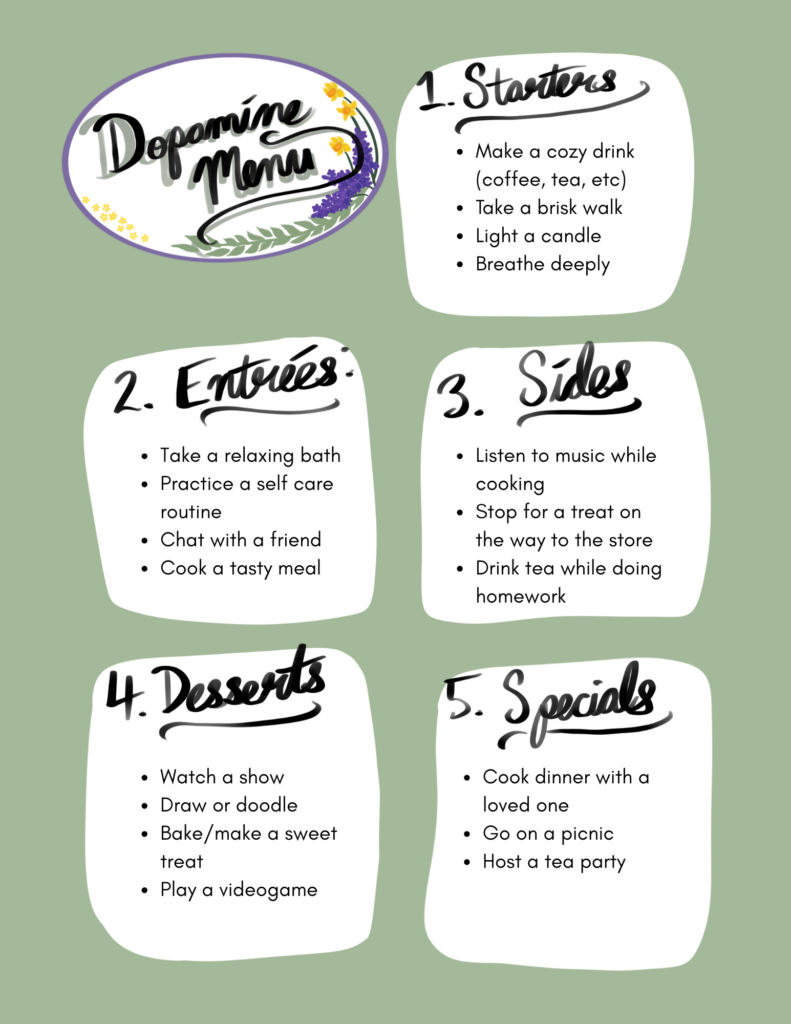
Illustrated in Figure 1 is a personalized dopamine menu to further contextualize ideas for what a dopamine menu could look like.
(Figure 1. Personalized Dopamine Menu)
Activity:
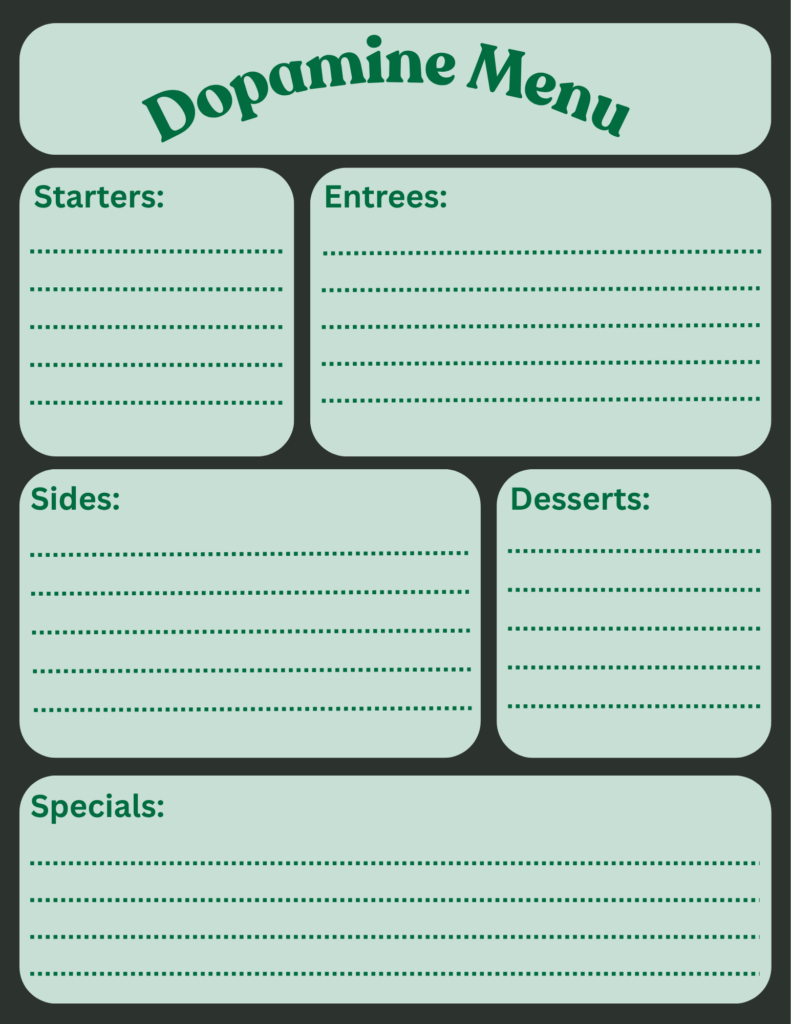
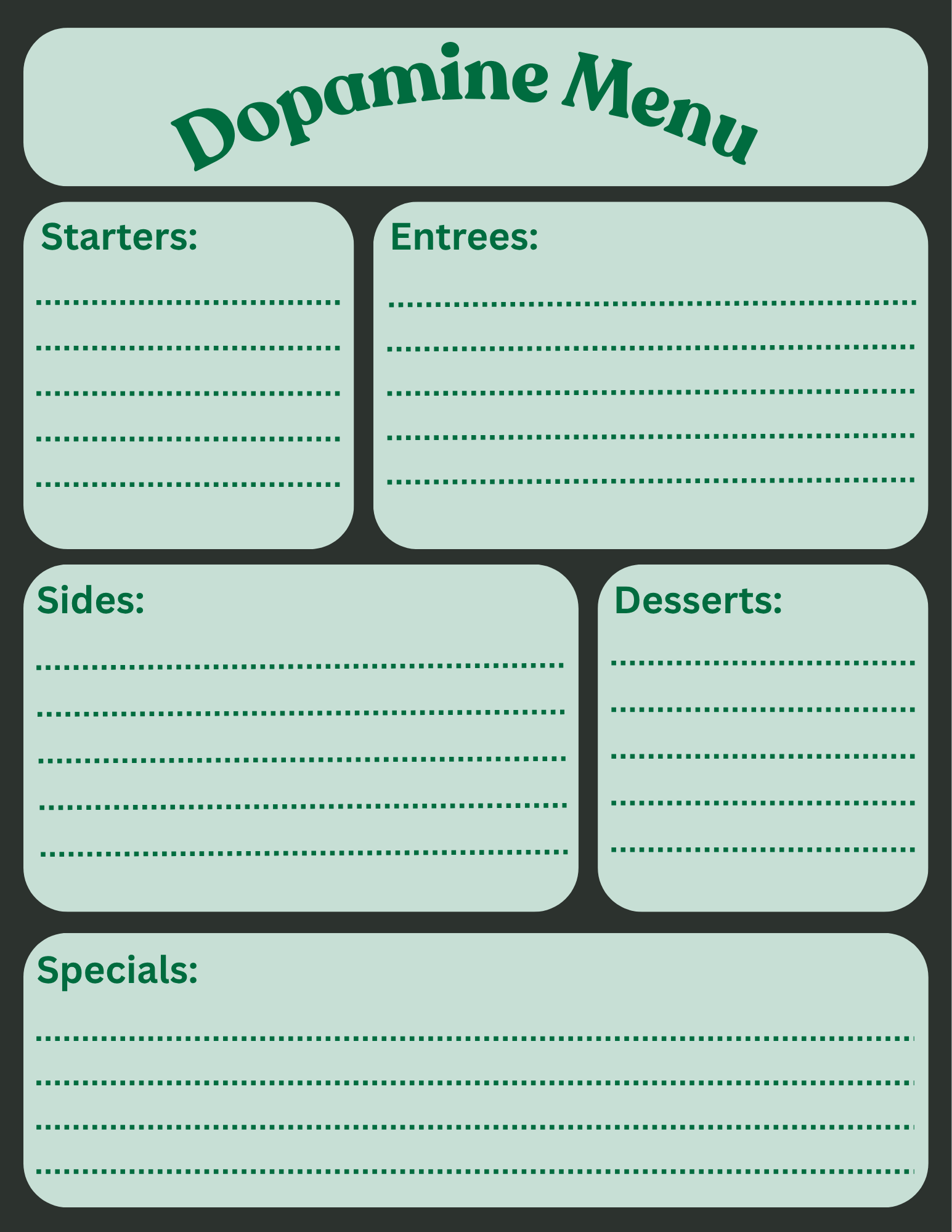
For this activity, learners must construct their own or fill out the following template to generate ideas of what their own personalized dopamine menu would look like.
2. Accountability strategies
Regulation of accountability can be difficult during adulthood, sometimes employing different strategies to hold oneself accountable can assist in reaching everyday goals. This section will cover different exercises to help assist with accountability. These strategies are not universal for all individuals, but will assist in exercising creativity in how to hold oneself accountable.
- Working alongside, or involving peers: Having peers to work alongside, ask for feedback, or watch your progress can aid in the process of completing projects and reaching personal goals. For example, body doubling alongside a peer is shown to help boost productivity in some individuals. In addition, showing progress with peers adds a layer of pressure to hold accountability. By displaying this progress with one’s peers, expectations are built thus making the individual feel more obligated to keep progressing.