Introduction and Overview
This module explores what it means to intentionally add creativity into daily routines. It encourages learners to design systems that feel engaging rather than draining. To do this, a variety of specific topics and information will be provided to the learner, following with activities for each section. Aesthetic Documentation and Organization, Dopamine Menu, and Personal Curriculum will each be topics that are addressed in this module. When viewing the following topics, it is important for the learner to note that they do not need to adopt all of these methods in their daily lives and routines, but to try each of them to see what best fits them.
Aesthetic Documentation and Organization:
This section explores how to implement whimsy and creativity into one’s documentation and organizational processes.
1. What whimsy means, and why it matters:
Whimsy is the enactment of unexpected, playful humor or fanciful ideas. Whimsy manifests itself in art, fashion, decoration, and other forms of self expression. It is an integral part of daily life as it allows an individual to express their thoughts, feelings and identity. Taking joy from these moments of self expression promotes strong mental health, social connections, as well as self confidence. Whimsy can be implemented into monotonous organization tasks such as scheduling and planning, note-taking and journaling, and scrapbooking and aesthetic organization.
2. Using colourful digital calendars:
3. Productivity apps and planners:
4. Scrapbooking and aesthetic organization:
Dopamine Menu:
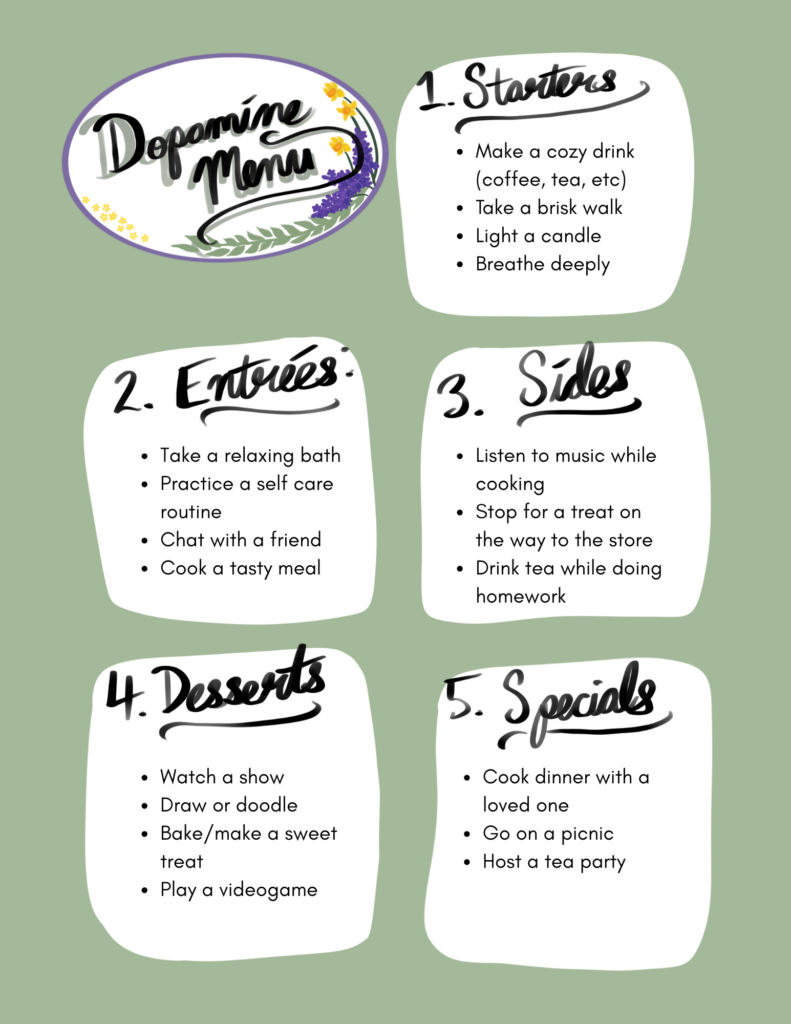
This section introduces the concept of a dopamine menu — a personalized list of activities that support healthy mood regulation.
1. Defining a Dopamine Menu
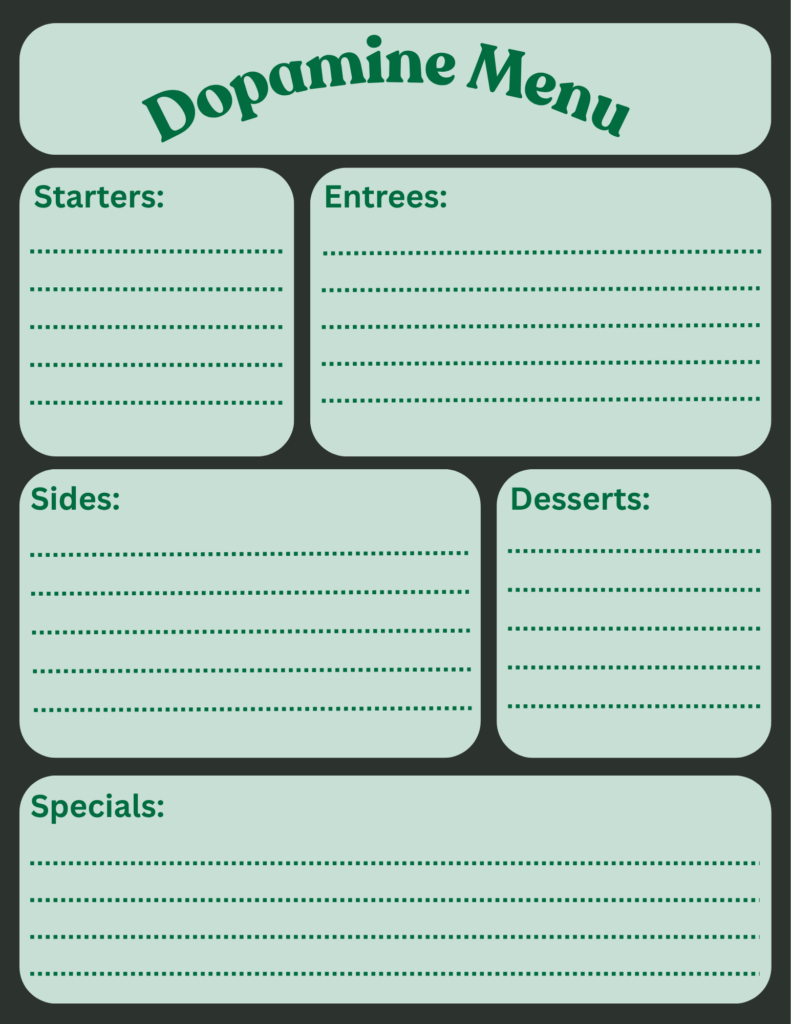
A dopamine menu is a set of personalized activities that help spark motivation in your brain during periods of procrastination, feeling unmotivated or being overwhelmed. This tool is intended to provide options in a similar manner to how one would pick out dishes from a restaurant menu: it includes starters, entrees, sides, desserts and specials.
text
text
2. Identifying quick vs. long-term reward activities:
3. Accountability strategies